
Since its origins in ancient Greece in 362 B.C., economics has been regarded as a social science that emerged from the behaviorist current, whose purpose is to study the best way to manage scarce resources in order to meet human needs.
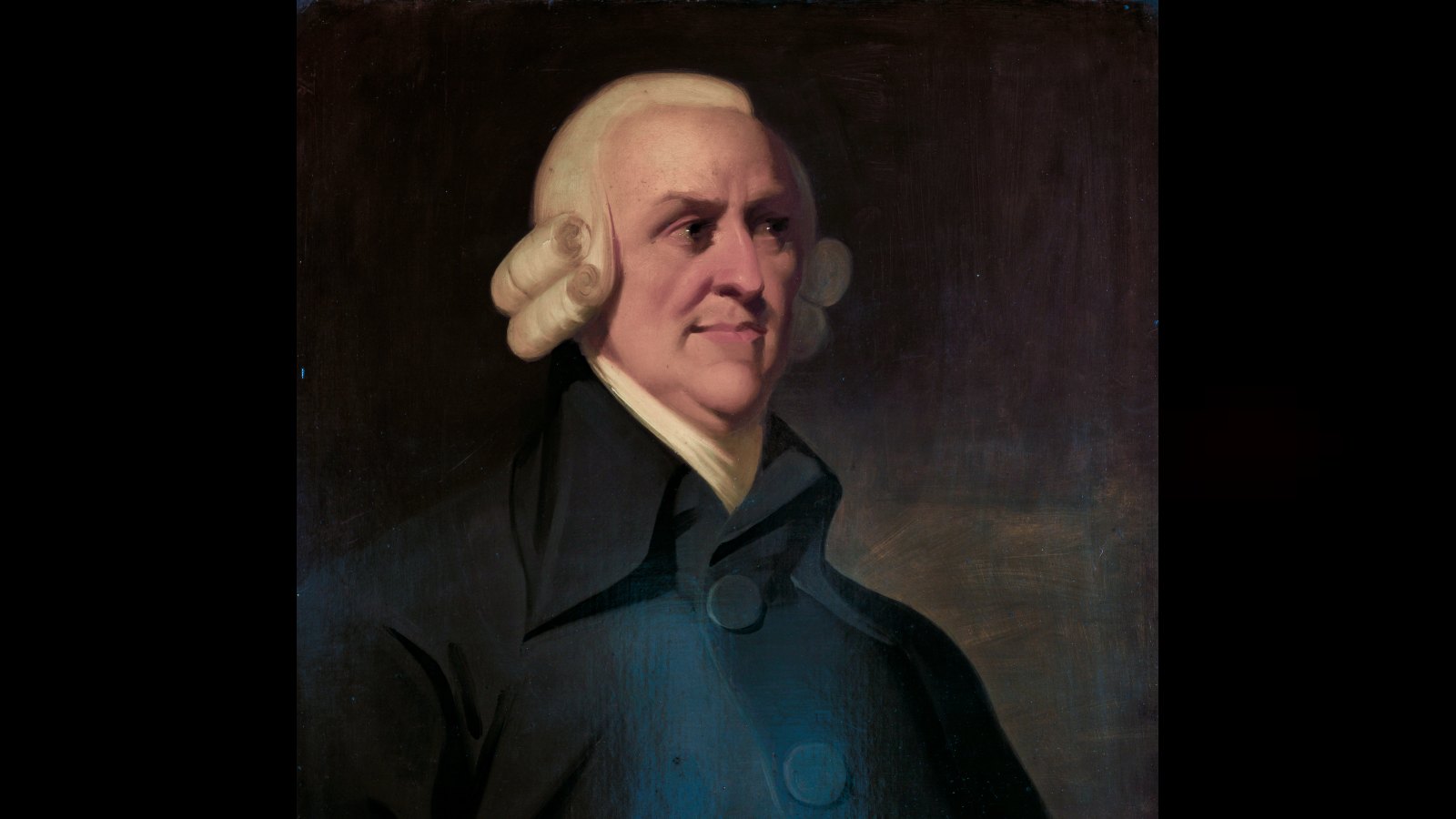
It was not until Adam Smith, who put forward our natural propensity both to exchange and to satisfy our needs, that economics began to be scientifically linked to philosophy, history, psychology, development and, above all, ethics. It is precisely from Smith through Keynes, Cortina, Sen, Kahneman and Tirole that economics became unquestionably tied to ethics and morality and, later on, to emotions. We can therefore say that it has always been bound to moral philosophy.
It has been, however, logistical economics that has strayed furthest from essential foundations such as human virtues, the concepts of happiness, sympathy and empathy and, of course, ethics. We have moved from the notion of managing scarce resources to hoarding, overexploitation, profit upon profit and unbridled speculation; there are even theories that put forward monetary expansion and the suppression of the state as drivers of economic development, which clearly has not worked.
At a time when the world faces the challenges of rebuilding the global economic architecture, tackling high inflation and excessive government debt, reducing the negative effects of present and future armed conflicts, properly addressing the challenges of AI and closing the gap between rich and poor, it is fitting to promote, from academia but above all from politics, a return of development models to the fundamental precepts of moral philosophy, so that economics is once again interwoven with ethics and morality. This would guarantee that development theories are guided by a human face, far removed from selfishness and indifference.
The historic moment we are living through, with the formation of two large economic blocs led by the United States and China amid weak growth, high prices, rising public debt and deep geopolitical tension, invites us to think of an economy that, above all, places human dignity at its center, to serve people rather than make use of them, under the ethical principles that gave rise to it in the eighteenth century and that remain valid today.
Dr. Carlos Alberto Martínez Castillo holds doctorates in Law, Economics and Philosophy. He has worked at the Bank of Mexico, the Ministry of Finance, the Office of the President of Mexico and Evercom USA. He served as Minister for Economic Affairs at the Embassy of Mexico in the United States and is a professor at Universidad Panamericana and IBERO. Contact: drcamartinez@evercom.com
The opinions expressed in this article are solely those of the author.
